David Letterman and President Barack Obama discuss whether the President believes racism is behind recent political attacks. Watch the clip and see "The Guy". HC.
Sunday, April 25, 2010

TIPS OF THE DAY
 "THE WORD “SICK”
If you feel sick, you feel physically or mentally ill; not healthy or well.
To feel sick - to feel unwell or ill.
e.g. I went home early from work because I felt sick.
To get sick - to throw up; to vomit
e.g.I got sick on the plane because of the turbulence.
To call in sick - to tell your employer that you're not coming to work because you don't feel well.
e.g.Betty called in sick three days last week. She had the flu. I was as sick as a dog. I was in bed with a fever of 42 degrees.
To be as sick as a dog - to be very, very sick.
LAUGHTER’S THE BEST MEDICINE

It Happen At Church
A blond man showed up at work one day with a black eye. When his co-workers saw him they asked him what happened. He told them it had happened at church. They insisted that you couldn’t get a black eye at church, and wanted to know what really happened.
So, he told them,
-“I went to the church, I got on my knees and prayed, I stood up to sing the hymns. There in front of me was the biggest woman I had ever seen, and when she had stood up, her dress had got stuck in her butt-crack, so being the gentleman I am, I reached over and pulled it out for her and she did not like that so she hit me.” The guys laughed and ribbed him about it all day.
The next week he showed up to work and his face was beat bad! Again the guys asked him what had happened and he told them he’d got beaten up at church. Again they didn’t believe him, so he explained,
- “I went to the church, I got on my knees and prayed, I stood up to sing the hymns, and there in front of me was that same big woman with her dress again stuck up her butt-crack.” At this point the other men interrupted and said
- “Please tell us you didn’t pull her dress out of there again?”
- “No, the guy standing beside me did, and I knew she didn’t like that—so
- I shoved it back in.”
REASONS WHY NOT

We’ve never done it before
Nobody else has ever done it.
It has never been tried before.
We tried it before.
Another company tried it before.
We’ve been doing it this way for 25 years.
It won’t work in a small company.
It won’t work in a large company.
It won’t work in our company.
Why change, it’s working ok.
The boss will never buy it.
It needs further investigation.
Our competitors are not doing it.
It’s too much trouble to change.
Our company is different.
The Ad Dept. says it can’t be done.
The Sales Dept. says it can’t be sold.
The Service Dept. won’t like it.
The janitor says it won’t work.
It can’t be done. That’s it !
We don’t have the money.
We don’t have the personnel.
We don’t have the equipment.
The Union will scream.
It’s too visionary.
You can’t teach an old dog new tricks.
QUOTATION OF THE DAY
 "I would like the firing squad, please."
RONNIE LEE GARDNER, a condemned murderer in Utah, picking his method of execution.

Soapbox
Function: noun (count)
Plural: soapboxes
Meaning:
A box or small platform that someone stands on to give a speech to people in an outdoor, public place
e.g.: a soapbox speech
Note: Soapbox is often used figuratively to describe making speeches or expressing strong opinions.
e.g.: His fame as an actor provides him with a soapbox to encourage young people to vote.
He jumped on the soapbox and spoke out against the war.
She needs to get off her soapbox and stop telling people what to do.
Sunday, April 18, 2010
Clip of The Day
All right, everyboby! Here's a work of art. Enjoy this old clip where Dean Martin challenges John Wayne to sing. Mr. Wayne then, by mysterious means sings a hit with the voice of Frank Sinatra. Very Funny. HC.
Uncle Scam

Tough economic times are, unfortunately, boom times for scammers, as people desperate for money and jobs let down their guards and are more likely to pursue questionable financial opportunities that caution might ordinarily warn them away from. And as folks become more inured to monetary woes, their charitable inclinations are more easily exploited by scammers pretending to be persons in need of sympathetic helping hands. Listed below are several pervasive forms of scams that have proven particularly alluring to potential victims when times are tough.
Nigerian Scam
A wealthy foreigner who needs help moving millions of dollars from his homeland promises a hefty percentage of this fortune as a reward for assisting him.
Foreign Lottery Scam
Announcements inform recipients that they've won large sums of money in foreign lotteries.
Secret Shopper Scam
Advertisers seek applicants for paid positions as 'secret' or 'mystery' shoppers.
Work-at-Home Scam
Advertisers offer kits that enable home workers to make money posting links on the Internet.
Friends and Family Member in Distress Scam
Scammers impersonate distressed family members in desperate need of money.
Famous last words
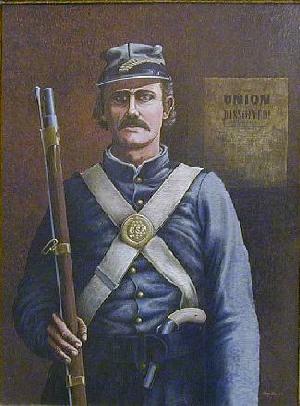
Cold Harbor. June 3rd. I am dead.
Who: An American Soldier
Note: This note was found on the body of a Union soldier, pinned to the inside of his jacket. Prior to the suicidal attack at the Battle of Cold Harbor on June 3rd, 1864, many Union soldiers placed final notes inside their jackets prior to leaving their entrenchments.
LAUGHTER’S THE BEST MEDICINE

I Owe My Mother
1. My mother taught me TO APPRECIATE A JOB WELL DONE .
"If you're going to kill each other, do it outside. I just finished cleaning."
2. My mother taught me RELIGION.
"You better pray that will come out of the carpet."
3. My mother taught me about TIME TRAVEL.
"If you don't straighten up, I'm going to knock you into the middle of next week!"
4. My mother taught me LOGIC.
"Because, I said so, that's why."
5. My mother taught me MORE LOGIC .
"If you fall out of that swing and break your neck, you're not going to the store with me."
6. My mother taught me FORESIGHT.
"Make sure you wear clean underwear, in case you're in an accident."
7. My mother taught me IRONY.
"Keep crying and I'll give you something to cry about."
8. My mother taught me about the science of OSMOSIS .
"Shut your mouth and eat your supper."
9. My mother taught me about CONTORTIONISM.
"Will you look at that dirt on the back of your neck"
10. My mother taught me about STAMINA
"You'll sit there until all that spinach is gone."
11. My mother taught me about WEATHER.
"This room of yours looks as if a tornado went through it."
12. My mother taught me about HYPOCRISY.
"If I told you once, I've told you a million times. Don't exaggerate!"
13. My mother taught me the CIRCLE OF LIFE..
"I brought you into this world, and I can take you out"
14. My mother taught me about BEHAVIOUR MODIFICATION .
"Stop acting like your father!"
15. My mother taught me about ENVY.
"There are millions of less fortunate children in this world who don't have wonderful parents like you do."
16. My mother taught me about ANTICIPATION.
"Just wait until we get home."
17. My mother taught me about RECEIVING .
"You are going to get it when you get home!"
18. My mother taught me MEDICAL SCIENCE.
"If you don't stop crossing your eyes, they are going to get stuck that way."
19. My mother taught me ESP.
"Put your sweater on; don't you think I know when you are cold?"
20. My mother taught me HUMOUR.
"When that lawn mower cuts off your toes, don't come running to me."
21. My mother taught me HOW TO BECOME AN ADULT .
"If you don't eat your vegetables, you'll never grow up."
22. My mother taught me GENETICS.
"You're just like your father."
23. My mother taught me about my ROOTS.
"Shut that door behind you. Do you think you were born in a barn?"
24. My mother taught me WISDOM.
"When you get to be my age, you'll understand."
And my favorite:
25 My mother taught me about JUSTICE .
"One day you'll have kids, and I hope they turn out just like you!"
Thank you, Mom!
Quote of the Day

If you really don't know where to go, it makes no difference which road you take. (Cheshire Cat)
Word of The Day

Vest
Function: verb (with object)
Inflected forms:
vests; vested; vesting
Status: formal
Meaning:
To give (someone) the legal right or power to do something or to own land or property
e.g:
Congress is vested with the power to declare war. The power to declare war is vested in Congress.
After five years, you’ll be fully vested in the company pension plan. (you will have earned the right to get a full pension when you retire).
Monday, April 12, 2010
The Winter of My Discontent

You guys & dolls have noticed that this Blog has been motionless since last January. We do have a very serious reason for that. The fact is that some idiots have invaded our place for the advertisement of Viagra, Cialis and other potions. Another stupid appears tearfully accusisng his girlfriend of having sex with his best friend, and as a revenge, he is willing to show photos of the traitress exactly the way she came into the world. In the nude. I considered it to be a very serious menace! Not to mention the numerous times I won in the lottery somewhere and was favoured with fabulous amounts of sterling pounds and dollars. Ten or twenty messages of the kind per day were driving me crazy. Too much for my foolish mind. Now as the problem seems to have been solved we have another one. You cannot (at least for the time being) send your comments if you want to. Noboby is allowed to do so! For the sake of the Blog. Sorry. But the show must go on.HC .
Climate Changes

Gordon Brown
Climate change is the biggest threat to all our futures. It will affect every individual, every family, every community, every business and every country.
So it is fitting that today people from all over the world are coming together to blog on climate change for Blog Action Day.
In less than two months, politicians will meet in Copenhagen to forge a critical new deal on tackling climate change.
I will go to the talks in December if it means we will get an agreement and I am urging other leaders to join me. But it must be the start of something not the end.
And it is not just about what governments do; we all have to take responsibility to cut emissions from our homes, our cars and our places of work.
Sarah and I are trying to do our bit. In Downing Street, we are composting, recycling, using energy-saving light bulbs and buying locally-sourced and sustainable food whenever possible. It’s little things like this which will make a big difference if we all do them.
Like every parent, I want to leave a safe and secure world for my children. And I want to be able to look them in the eye because our generation stood up for their future.
Funny Conversations
Wife: I wish I was a newspaper, So I'd be in your hands all day.
Husband: I too wish that you were a newspaper, So I could have a new one everyday.
Doctor: Your husband needs rest and peace. Here are some sleeping pills.
Wife: When must I give them to him?
Doctor: They are for you
Husband: Today is Sunday and I have to enjoy it. So I bought 3 movie tickets.
Wife: Why Three?
Husband: For you and your parents
QUIZ – Read The Sentence Below:
"FINISHED FILES ARE THE RESULT OF YEARS OF SCIENTIFIC STUDY COMBINED WITH THE EXPERIENCE OF YEARS."
Now count the F's in that sentence. Count only once, don't go back a 2nd time. Answer Somewhere In This Issue.
Answer this very important question...!…
How do you know when you're in the middle of nowhere?
ANSWER TO THE QUIZ:
A person of average intelligence finds three of them.
If you spotted four, you're above average.
If you got five, you can turn your nose at most anybody.
If you caught six, you are a genius.
There is no catch. Many people forget the "OF"'s.
The human brain tends to see them as V's and not F's.
Wife: I wish I was a newspaper, So I'd be in your hands all day.
Husband: I too wish that you were a newspaper, So I could have a new one everyday.

Doctor: Your husband needs rest and peace. Here are some sleeping pills.
Wife: When must I give them to him?
Doctor: They are for you
Husband: Today is Sunday and I have to enjoy it. So I bought 3 movie tickets.
Wife: Why Three?
Husband: For you and your parents
QUIZ – Read The Sentence Below:
"FINISHED FILES ARE THE RESULT OF YEARS OF SCIENTIFIC STUDY COMBINED WITH THE EXPERIENCE OF YEARS."
Now count the F's in that sentence. Count only once, don't go back a 2nd time. Answer Somewhere In This Issue.
Answer this very important question...!…
How do you know when you're in the middle of nowhere?
ANSWER TO THE QUIZ:
A person of average intelligence finds three of them.
If you spotted four, you're above average.
If you got five, you can turn your nose at most anybody.
If you caught six, you are a genius.
There is no catch. Many people forget the "OF"'s.
The human brain tends to see them as V's and not F's.
Word of The Day
 Given
Given Function: adjective
Meaning:
Given is used to refer to a particular time, place, etc., that has been, will be, or might be specified.
e.g.: You’ll have to finish the exam within a given (amount of) time.
They agreed to meet again at a given location.
Climate has a great effect on the types of plants found in any given area.
You never know what might happen on any given night.
Idiom:
given to
Meaning:
Given to is used to say that a person often behaves in a specified way.
e.g.: A man (very) much given to swearing/profanity (a man who swears often)
She is somewhat given to behaving selfishly. (She is somewhat given to selfishness.)
Idiom:
take (something) as given
Meaning:
to regard or accept (something) as true or real
e.g.: I think we can take their support as given. (I think we can take (it) as given that they will support us. (I think we can assume that they will support us)
Monday, January 25, 2010
“We Are Ugly, But We Are Here”

By Edwidge Danticat
One of the first people murdered on our land was a queen. Her name was Anacaona and she was an Arawak Indian. She was a poet, dancer, and even a painter. She ruled over the western part of an island so lush and green that the Arawaks called it Ayiti land of high. When the Spaniards came from across the sea to look for gold, Anacaona was one of their first victims. She was raped and killed and her village pillaged in a tradition of ongoing cruelty and atrocity. Anacaona's land is now the poorest country in the Western hemisphere, a place of continuous political unrest. Thus, for some, it is easy to forget that this land was the first Black Republic, home to the first people of African descent to uproot slavery and create an independent nation in 1804.
I was born under Haiti's dictatorial Duvalier regime. When I was four, my parents left Haiti to seek a better life in the United States. I must admit that their motives were more economic that political. But as anyone who knows Haiti will tell you, economics and politics are very intrinsically related in Haiti. Who is in power determines to a great extent whether or not people will eat.
I am twenty six years old now and have spent more than half of my life in the United States. My most vivid memories of Haiti involve incidents that represent the general situation there. In Haiti, there are a lot of "blackouts," sudden power failures. At those times, you can't read or study or watch TV, so you sit around a candle and listen to stories from the elders in the house. My grandmother was an old country woman who always felt dis- placed in the city of Port-au-Prince where we lived and had nothing but her patched-up quilts and her stories to console her. She was the one who told me about Anacaona. I used to share a room with her. I was in the room when she died. She was over a hundred years old. She died with her eyes wide open and I was the one who closed her eyes. I still miss the countless mystical stories that she told us. However, I accepted her death very easily because in Haiti death was always around us.
As a little girl, I attended more than my share of funerals. My uncle and legal guardian was a Baptist minister and his family was expected to attend every funeral he presided over. I went to all the funerals he presided over. I went to all the funerals in the same white lace dress. Perhaps it was because I attended so many funerals that I have such a strong feeling that death is not the end, that the people we bury are going off to live somewhere else. But at the same time, they will always be hovering around to watch over us and guide us through our journeys.
When I was eight, my uncle' s brother-in-law went on a long journey to cut cane in the Dominican Republic. He came back, deathly ill. I remember his wife twirling feathers inside his nostrils and rubbing black pepper on his upper lip to make him sneeze. She strongly believed that if he sneezed, he would live. At night, it was my job to watch the sky above the house for signs of falling stars. In Haitian folklore, when a star falls out of the sky, it means someone will die. A star did fall out of the sky and he did die.
I have memories of Jean Claude "Baby Doc" Duvalier and his wife, racing by in their Mercedes Benz and throwing money out of the window to the very poor children in our neighborhood. The children nearly killed each other trying to catch a coin or a glimpse of Baby Doc. One Christmas, they announced on the radio that the first lady, Baby Doc's wife, was giving away free toys at the Palace. My cousins and I went and were nearly killed in the mob of children who flooded the palace lawns.
All of this now brings many questions buzzing to my head. Where was really my place in all of this? What was my grandmother's place? What is the legacy of the daughters of Anacaona? What do we all have left to remember, the daughters of Haiti?
Watching the news reports, it is often hard to tell whether there are real living and breathing women in conflict-stricken places like Haiti. The evening news broadcasts only allow us a brief glimpse of presidential coups, rejected boat people, and sabotaged elections. The women's stories never manage to make the front page. However they do exist.
I know women who, when the soldiers came to their homes in Haiti, would tell their daughters to lie still and play dead. I once met a woman whose sister was shot in her pregnant stomach because she was wearing a t-shirt with an "anti-military image." I know a mother who was arrested and beaten for working with a pro-democracy group. Her body remains laced with scars where the soldiers put out their cigarettes on her flesh. At night, this woman still smells the ashes of the cigarette butts that were stuffed lit inside her nostrils. In the same jail cell, she watched as paramilitary "attaches" raped her fourteen-year-old daughter at gun point.
Then mother and daughter took a tiny boat to the United States, the mother had no idea that her daughter was pregnant. Nor did she know that the child had gotten the HIV virus from one of the paramilitary men who had raped her. The grandchild the offspring of the rape was named Anacaona, after the queen, because that family of women is from the same region where Anacaona was murdered. The infant Anacaona has a face which no longer shows any trace of indigenous blood; however, her story echoes back to the first flow of blood on a land that has seen much more than its share.
There is a Haitian saying which might upset the aesthetic images of most women. Nou led, Nou la, it says. We are ugly, but we are here. Like the modesty that is somewhat common in Haitian culture, this saying makes a deeper claim for poor Haitian women than maintaining beauty, be it skin deep or otherwise. For most of us, what is worth celebrating is the fact that we are here, that we against all the odds exist. To the women who might greet each other with this saying when they meet along the countryside, the very essence of life lies in survival. It is always worth reminding our sisters that we have lived yet another day to answer the roll call of an often painful and very difficult life. It is in this spirit that to this day a woman remembers to name her child Anacaona, a name which resonates both the splendor and agony of a past that haunts so many women.
When they were enslaved, our foremothers believed that when they died their spirits would return to Africa, most specifically to a peaceful land we call Guinin, where gods and goddesses live. The women who came before me were women who spoke half of one language and half another. They spoke the French and Spanish of their captors mixed in with their own African language. These women seemed to be speaking in tongue when they prayed to their old gods, the ancient African spirits. Even though they were afraid that their old deities would no longer understand them, they invented a new language our Creole patois with which to describe their new surroundings, a language from which colorful phrases blossomed to fit the desperate circumstances. When these women greeted each other, they found themselves speaking in codes.
- How are we today, Sister?
- I am ugly, but I am here.
These days, many of my sisters are greeting each other away from the homelands where they first learned to speak in tongues. Many have made it to other shores, after traveling endless miles on the high seas, on rickety boats that almost took their lives. Two years ago, a mother jumped into the sea when she discovered that her baby daughter had died in her arms on a journey which they had hoped would take them to a brighter future. Mother and child, they sank to the bottom of an ocean which already holds millions of souls from the middle passage the holocaust of the slave trade that is our legacy. That woman's sacrifice moved then-deposed Haitian President Jean Bertrand Aristide to the brink of tears. However, like the rest of us, he took comfort in the past sacrifices that were made for all of us, so that we could be here.
The past is full of examples when our foremothers and forefathers showed such deep trust in the sea that they would jump off slave ships and let the waves embrace them. They too believed that the sea was the beginning and the end of all things, the road to freedom and their entrance to Guinin. These women have been part of the very construction of my being ever since I was a little girl. Women like my grandmother who had taught me the story of Anacaona, the queen.
My grandmother believed that if a life is lost, then another one springs up replanted somewhere else, the next life even stronger than the last. She believed that no one really dies as long as someone remembers, someone who will acknowledge that this person had in spite of everything been here. We are part of an endless circle, the daughters of Anacaona. We have stumbled, but have not fallen. We are ill-favored, but we still endure. Every once in a while, we must scream this as far as the wind can carry our voices: "We are ugly, but we are here! And here to stay."
Edwidge Danticat, from Haiti, published Krik? Krak (1995) and Breath, Eyes, Memory (1995). She won a Pushcart Prize for a story in the Caribbean Writer in 1994 and also was a recipient of the Canute A. Brodhurst Prize for fiction.
Tuesday, January 19, 2010
Subscribe to:
Posts (Atom)
